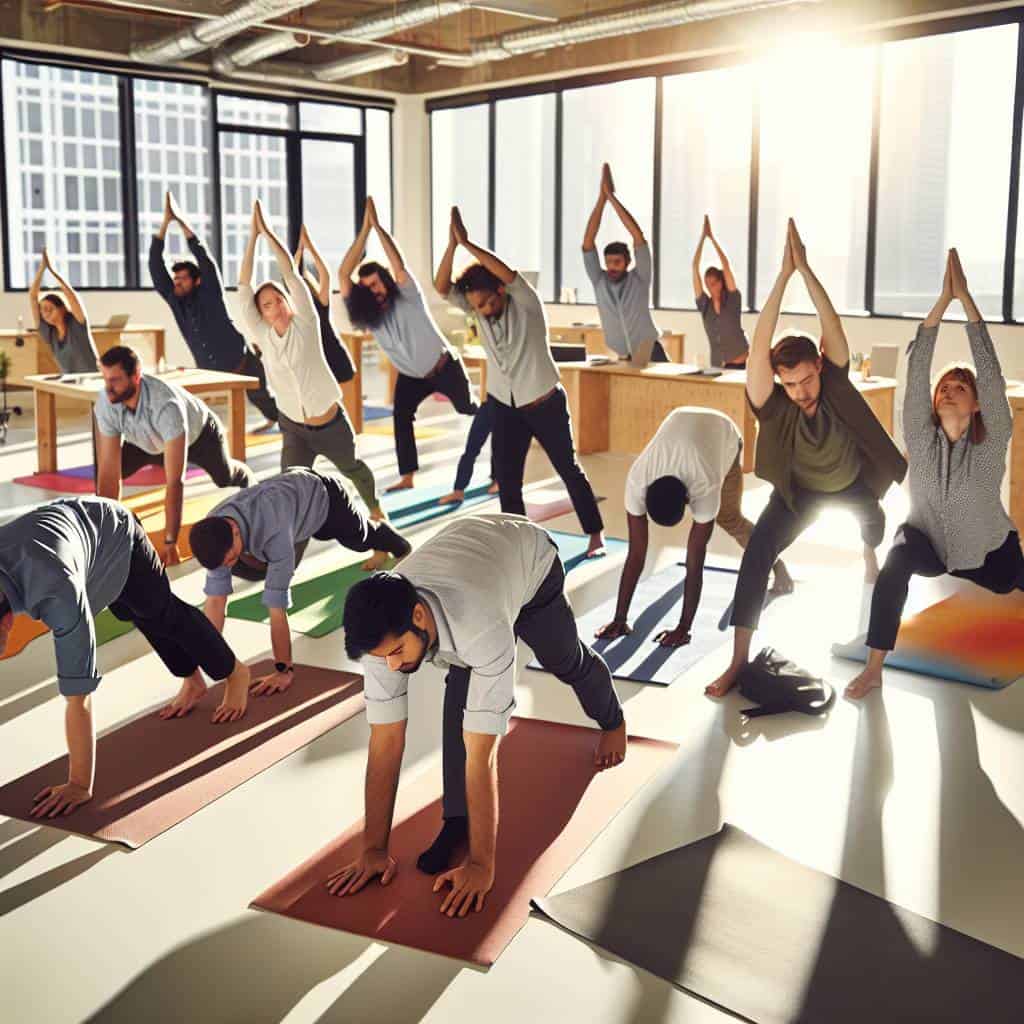
I once found myself in a mandatory “team-building” yoga session, surrounded by a bunch of equally perplexed engineers, each more awkward than the next. Picture this: a room full of people whose idea of exercise is lifting a coffee mug, now trying to contort into downward dogs and warrior poses without pulling something. It was a train wreck of epic proportions. The whole thing felt more like a punishment than a wellness activity. And let’s be real—no amount of awkward stretching was going to make me suddenly bond with the guy who steals my lunch from the office fridge.
So, if you’re here hoping for the magic formula to transform your crew into a cohesive unit through some kumbaya nonsense, let me set you straight. This article isn’t about holding hands and pretending everything’s peachy. We’re diving into the real stuff—like why these activities often miss the mark and what actually works when you strip away the pretense. Expect to hear the unvarnished truth about yoga, mindfulness, and other so-called “supportive” measures. Spoiler alert: it’s not what the wellness gurus want you to believe.
Table of Contents
Yoga, Mindfulness, and the Art of Not Rolling Your Eyes
Alright, let’s cut through the fluff. Yoga and mindfulness are often hailed as the ultimate solutions for team bonding in corporate circles, but let’s be real. If you think squeezing a bunch of stressed-out engineers into a conference room for a “relaxing” yoga session is going to magically make them best friends, you’re kidding yourself. It’s not about the awkward stretches or the meditative breathing exercises. It’s about acknowledging the reality that everyone’s bringing their own baggage to the mat—and that’s okay. The point isn’t to force everyone into a zen-like state of harmony, but to give them a space where they can just be. Maybe even laugh at how ridiculous a downward dog looks when you’re surrounded by your colleagues.
Now, don’t get me wrong. There’s value in these practices, especially when done right. Mindfulness, in particular, can help you stay sane when deadlines are looming and the pressure’s on. But the art of not rolling your eyes comes into play when you start seeing these activities for what they really are: tools. They’re not magic wands. They’re not going to fix a dysfunctional team overnight, but they can help create a framework where people feel supported. It’s about peeling back the layers of corporate nonsense and finding moments of genuine connection. And who knows, maybe after a few sessions, you’ll find that the guy from accounting isn’t half bad at balancing in tree pose.
The Illusion of Tranquil Teams
Expecting yoga and mindfulness to fix your team’s dysfunction is like thinking a band-aid will heal a broken bone.
Why Group Wellness is a Personal Battle
After all the noise, I’ve learned something crucial about group wellness activities. They’re not the magic bullet some pundits sell them as. You can gather the whole gang for a round of deep breathing and downward dogs, but it won’t erase the underlying tensions tied to real human dynamics. Group wellness might offer a temporary distraction, a shared laugh, or a moment of calm, but it doesn’t replace the need for honest conversations and genuine understanding.
In my journey, I’ve come to appreciate that true support starts with acknowledging that each of us is fighting our own battles. No amount of forced harmony will smooth over the cracks if we aren’t willing to do the personal work. So, next time someone suggests a group yoga session to ‘bring everyone together’, maybe try something radical: ask what’s really going on. Because at the end of the day, it’s not about the poses or the breathing. It’s about the people.
