I once found myself wedged into a window seat on a transatlantic flight, my knees practically kissing the seat in front of me. The air was thick with the smell of microwaved chicken, and I had a sudden epiphany: this is how statues must feel, trapped in their own stone. My legs were muttering a silent protest, threatening to solidify and become part of the aircraft. It was then I realized, deep vein thrombosis wasn’t just a medical term thrown around by cautious flight attendants; it was a real risk lurking beneath the surface of every long-haul journey I took. But hey, who wants to end a vacation on a stretcher, right?
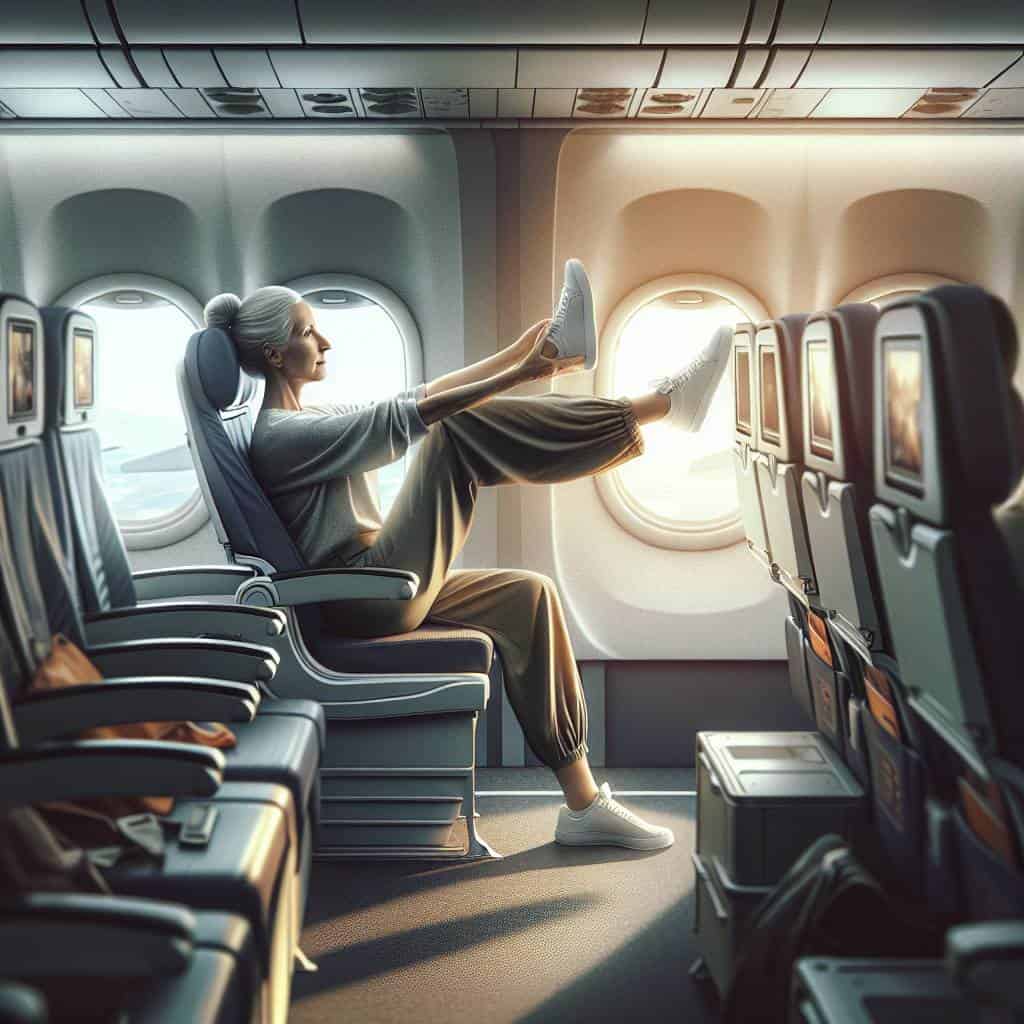
So here’s the deal. I’m going to cut through the usual nonsense and give you the real lowdown on keeping your blood flowing while soaring at 35,000 feet. Forget the stale advice and tired clichés—I’m talking about the in-seat maneuvers that might make you look like you’ve lost your mind, the ugly truth about compression socks, and the no-nonsense approach to staying healthy when you’re packed like sardines. Stick with me, and you’ll walk off that plane with legs that still function—no cement statues here.
Table of Contents
My Dance with Compression: The Unlikely Hero of In-Flight Health
Ever found yourself wedged into an airplane seat, feeling like a sardine in a metal can, legs screaming for relief? Trust me, I’ve been there. We all have. Long flights turn our limbs into ticking time bombs for deep vein thrombosis (DVT), a sneaky condition that’s surprisingly easy to dodge—if you know the drill. Enter compression socks, the unassuming yet valiant champion of in-flight health. These fashion-challenged wonders might not win any style awards, but they work like a charm, squeezing life back into your blood vessels and waging war against stagnation.
Picture this: cruising at 35,000 feet, cramped space, and the subtle yet persistent pull of gravity. It’s a perfect storm for sluggish circulation. But here’s where my engineer brain kicks in. The principle is simple: compression socks apply graduated pressure, strongest at the ankle, tapering up the leg. This keeps your blood moving and your veins happy. But don’t just sit there like a statue. You’ve got to move. Do that awkward aisle shuffle, or partake in the in-seat wiggle dance. Every little movement counts. Because let’s face it, nobody wants to arrive at their destination with legs that feel like lead. So, embrace the socks. They’re your trusty sidekick in this high-altitude battle, turning potential disaster into just another smooth flight.
In-Flight Survival Wisdom
In the cramped quarters of an airplane, movement isn’t just a suggestion—it’s your lifeline. Embrace the wiggle, or prepare to feel like a fossilized relic.
The Final Stretch: Embracing Movement and Compression
There’s a certain irony in finding salvation in the smallest of movements and the tightest of grips. As someone who thrives on precision and structure, I’ve learned that sometimes, it’s the little things that keep us grounded—or, in this case, flying safely. Those in-seat leg workouts, the rhythmic push and pull against the constraints of compression socks, have become my quiet rebellion against the stagnant air of long flights. It’s a dance of defiance, a way to claim control over a situation that otherwise leaves us at the mercy of recycled air and cramped quarters.
But beyond the mechanics, there’s a deeper lesson here. In a world where technology races ahead, promising ease at every turn, it’s easy to overlook the power of simplicity. A stretch, a squeeze, a breath of fresh air—these are my reminders that health isn’t something handed to us on a digital platter. It’s something we earn through conscious effort, one movement at a time. So, next time you find yourself buckled in and bracing for hours of tedium at 35,000 feet, remember this: your body deserves more than just survival. It deserves a little dance, a little care, and a whole lot of respect.
