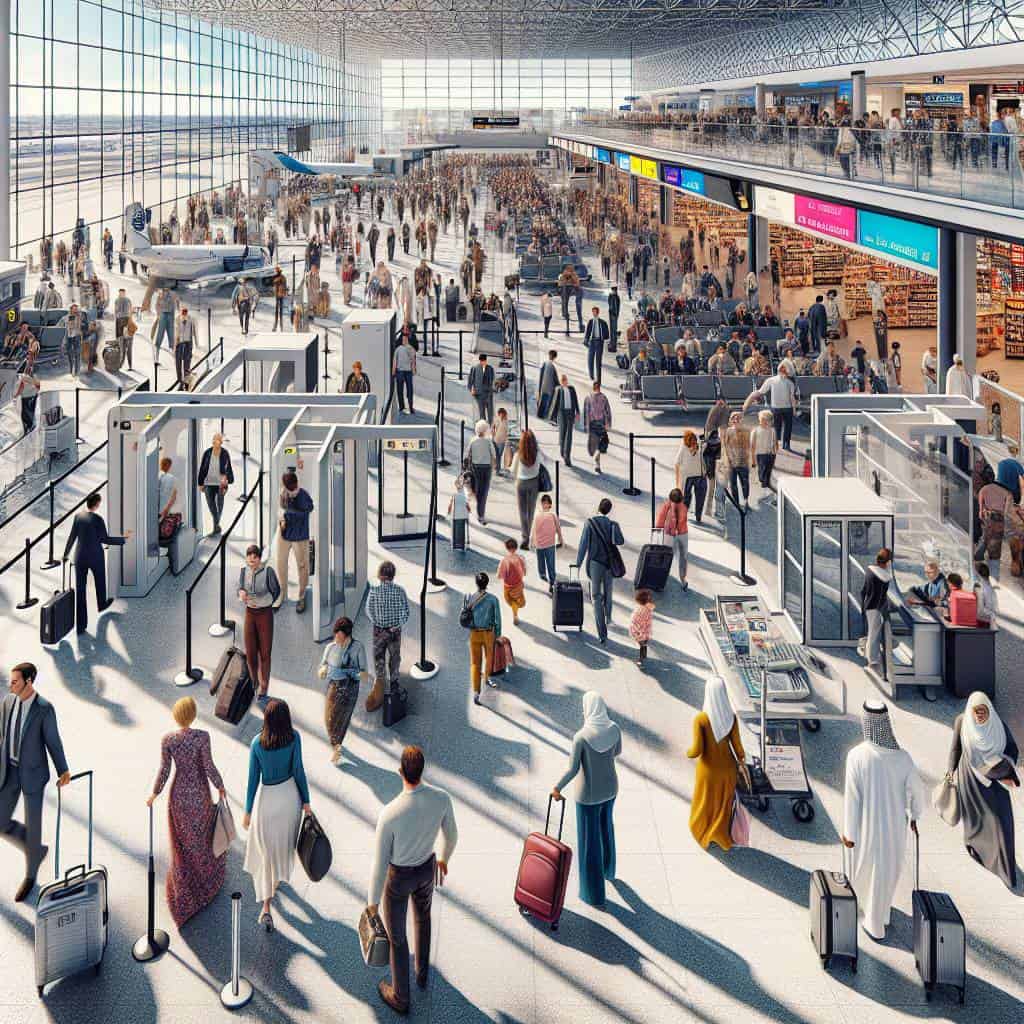
I found myself once again in the belly of the beast—an international airport—where time ticks differently, and logic takes a backseat. Picture me, an engineer who thrives on order, trapped in a labyrinth of duty-free shops and pointless security checks. It’s a place where the signs seem to be written in a language only seasoned travelers can decipher. I’m convinced airports are designed to make you question your very existence. You start at Gate 12, end up at Gate 45, and somewhere in between, you lose your patience and, occasionally, your luggage. It’s a dance of chaos, one I’ve reluctantly learned to navigate with a grimace and a grudging respect for the madness.
So, why should you care about this airport circus? Because understanding it is your ticket to a smoother journey. In this article, I won’t sugarcoat or pander with glossy travel brochure lines. Instead, I’ll cut through the nonsense, comparing these international behemoths like a mechanic dissecting an engine. You’ll get the raw truth about their services, how to navigate these sprawling complexes, and what facilities are actually worth your time. Consider this your no-nonsense guide to surviving the concrete jungles of international travel.
Table of Contents
Getting Lost in the Maze: An Unwanted Tour of Airport Navigation
Ever been lost in a labyrinthine airport, feeling like a mouse in a science experiment? You’re not alone. International airports are sprawling beasts, each one its own churning ecosystem. The signs promise straightforward paths to your gate but often deliver more confusion than clarity. You’re dodging travelers, skirting luggage, and constantly glancing at the time. It’s a game of human Frogger, and the stakes are high. Miss your flight, and you’re stuck in purgatory—a place where overpriced sandwiches and uncomfortable seats rule supreme.
The real kicker? These airports are designed to be efficient. And yet, efficiency gets tangled in the web of sprawling corridors and poorly labeled exits. It’s ironic how these hubs of global travel can leave you feeling more stranded than connected. One minute, you’re trying to decipher a map that looks like it was designed by a committee of blindfolded architects. The next, you’re navigating a terminal that rivals a city in both size and complexity. It’s an unwanted tour, alright, one that leaves you longing for simplicity and wishing for a guide who’s more than just a printed pamphlet in your hand.
All the while, you’re bombarded by the allure of duty-free shops and luxury lounges, as if a fancy bottle of cologne or a plush chair will somehow ease the chaos. Spoiler alert: it won’t. These facilities, while impressive, often distract from the core mission—getting to your gate with sanity intact. The truth is, airports have become mini-cities, complete with their own set of rules and rhythms. But if you’re not prepared to navigate this concrete jungle, it’s all too easy to get swallowed by its vastness and spit out on the wrong side of security.
The Terminal Truth
Comparing international airports is like judging a city by its subway map; it’s less about the amenities and more about surviving the labyrinth.
The Final Boarding Call: Lessons from the Tarmac
After wading through the chaos of international airports, I’ve learned that the so-called ‘services’ and ‘facilities’ are often just distractions from the tedium of travel. The glossy veneer of duty-free shops and overpriced lounges can’t mask the reality of shuffling through endless lines and security checkpoints. It’s a dance of efficiency and frustration, where each step is dictated by someone else’s rules.
In comparing these global transit hubs, it’s clear that there’s no perfect airport. Each one is a reflection of its city’s personality—its quirks and flaws laid bare in the terminals and gates. But maybe that’s the point. Airports aren’t destinations; they’re gateways, mirrors of the places we come from and where we’re going. And in that reflection, amidst the chaos, there’s a strange kind of beauty. It’s not about the amenities or the architecture; it’s about the journey itself and the stories we collect along the way.
