I remember the first time a robot tried to take my job. I was at the airport, watching one of those mechanical marvels “gracefully” knock over a row of luggage. It was like watching a toddler learn to walk—except this toddler was made of stainless steel and had a price tag that could buy a small island. As I stood there with my coffee, contemplating the absurdity, I couldn’t help but think that if this is the future, maybe my engineering degree should have included a minor in babysitting rogue robots.
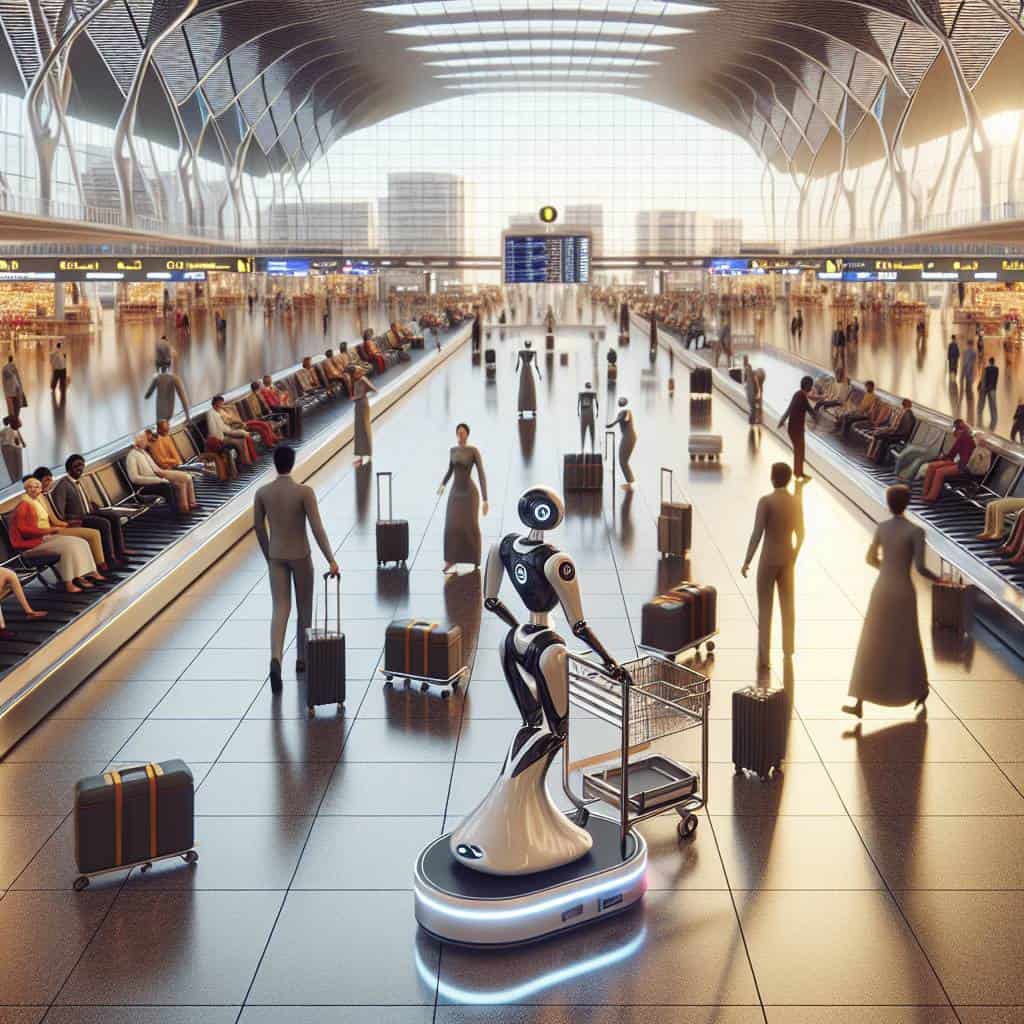
So, what’s really going on behind the scenes as these machines invade our airports? Let’s cut through the hype and get to the nuts and bolts of it. We’re diving into how these robots are reshaping baggage handling, cleaning, and logistics. Yes, they might be efficient, but they’re also turning the airport into a circus of circuit boards and algorithms. Stick around, and I’ll tell you what’s working, what’s not, and why some of you might want to start polishing your résumés.
Table of Contents
The Vacuuming Robot That Stole My Heart (and My Flight)
Airports are like finely-tuned machines, or at least they should be. But throw in a few robots, and things get interesting. Picture this: I’m at the terminal, waiting for a flight that’s already delayed, when I spot a sleek little robot whirring around the floor. It’s a high-tech vacuuming robot, zipping between travelers and baggage carts like it owns the place. It’s mesmerizing, almost hypnotic. As it methodically sweeps up the debris of a thousand hurried footsteps, I can’t help but admire its precision. This isn’t just a piece of tech; it’s a master of its craft. And that’s when I realize I’ve been so entranced by this mechanical janitor that I completely missed my flight announcement.
The irony isn’t lost on me. Here we are, in a world where robots promise efficiency and punctuality, yet they’re also little distractions that can throw off even the best-laid plans. These machines aren’t just cleaning up; they’re part of a larger ecosystem that includes automated baggage handlers and logistics bots, all working to streamline the chaos of air travel. But let’s not kid ourselves. They’re far from perfect. Sure, they can move luggage faster than a human, but when a suitcase ends up in Timbuktu instead of Toronto, there’s no one to blame but the faceless whir of automation. It’s a reminder that while robots can enhance our efficiency, they can also amplify our mistakes.
So, in a sense, the vacuuming robot did steal my heart with its flawless dance across the terminal floor. But it also stole my flight, much like how these machines are gradually taking over airport functions. They’re impressive, no doubt, but they’re also a cautionary tale about relying too heavily on technology. We’re entrusting more and more of our travel experience to these digital custodians. And while they may not complain about overtime, they also won’t apologize when things go south. As I watch it glide away, I’m left pondering whether the trade-off is worth it.
The Irony of Progress
In the race to automate every corner of the airport, we’ve engineered a world where robots clean the floors spotless and yet lose track of your luggage in a heartbeat.
When Metal Meets Humanity
In this ever-evolving dance between man and machine, I’ve found myself both awed and frustrated. The airport, once a bastion of human chaos, is now a testament to the relentless march of automation. The sweeping arms of cleaning bots and the silent efficiency of baggage handlers signal a new era. But while you might think these advancements are all about efficiency and progress, there’s an undeniable charm to the unpredictability of human error. Sure, a robot might never lose its temper or take a coffee break, but it also won’t share a laugh or an eye-roll when those long lines test your last nerve.
So here we are, at a crossroads of metal and humanity. It’s a tug-of-war between the convenience of automation and the irreplaceable quirks of human interaction. It’s about finding a balance, maybe even a symbiosis, where we let machines handle the monotony and retain the human touch where it truly matters. As I navigate this brave new world, I find myself wondering not just what technology will replace next, but what piece of our uniquely human experience we might lose—or preserve—in the process.
