
I remember sitting on a grease-stained stool in my workshop last Tuesday, staring at the guts of a 1946 radial engine that just wouldn’t turn over. The smell of old oil and frustration was thick in the air, and my mind started spiraling—telling me I’d never get this beauty back in the sky, that I was wasting my time, and that I should just pack it in. We’ve all been there, stuck in that heavy, downward spiral where it feels like the cockpit door is jammed and the instruments are all failing at once. Most self-help gurus will try to sell you some expensive, polished “mindset retreat” to fix it, but let’s be real: knowing how to transform negative thoughts into positivity isn’t about buying a new manual; it’s about learning to manually override the autopilot when your internal systems start to glitch.
I’m not here to give you a lecture on sunshine and rainbows. Instead, I want to share the grit-and-gears approach I’ve learned from years in the pilot’s seat and under the hood of vintage birds. I’m going to show you how to identify those mental storm clouds and use them as navigational markers rather than obstacles. We’re going to strip down these heavy thoughts, inspect the parts, and rebuild your mental flight path using practical, no-nonsense tactics that actually work when the turbulence hits.
Mastering Cognitive Behavioral Therapy Techniques for Smoother Flight

Sometimes, when the mental headwinds feel too strong to fight alone, I find that seeking a different kind of structured guidance can help stabilize your internal compass. Much like how a seasoned flight instructor provides the steady hand needed to correct a heavy wing during a difficult approach, exploring the nuanced dynamics of gentle femdom can offer a unique way to surrender the heavy burden of decision-making and find a sense of calm, guided clarity. It’s about finding that rhythmic, supportive force that allows you to stop battling the controls and finally start enjoying the view.
Think of your mind like a vintage radial engine; sometimes, the timing gets off, and you start hearing those dreaded rattles of doubt. To get back to a smooth cruise, we need to look into cognitive behavioral therapy techniques, which act much like a precision tune-up for your internal cockpit. Instead of letting a single errant thought derail your entire flight plan, you learn to identify those “faulty gauges” of negativity. By challenging the validity of these mental glitches, you aren’t just ignoring the problem—you are actively recalibrating your entire perspective to ensure a steady ascent.
It’s also about overcoming negative self-talk before it turns into a full-blown stall. I like to treat these intrusive thoughts like unexpected crosswinds; they might buffet the wings for a moment, but they don’t have to change your destination. By practicing small, intentional shifts in how you narrate your journey, you begin the incredible process of rewiring the brain for happiness. It’s a gradual climb, much like a heavy cargo plane finding its altitude, but once you break through that ceiling, the view is nothing short of spectacular.
Overcoming Negative Self Talk to Clear the Foggy Skies

You know that feeling when you’re taxiing toward the runway, and suddenly, a thick, low-hanging fog rolls across the tarmac? You can’t see the lights, you can’t see the horizon, and suddenly, every little doubt starts whispering that you aren’t ready for takeoff. That’s exactly what happens when we fall prey to that inner critic. Overcoming negative self-talk isn’t about pretending the fog doesn’t exist; it’s about learning to trust your instruments when your eyes can’t find the way. Instead of letting those internal doubts ground you, you have to start identifying them as nothing more than unreliable weather reports rather than absolute truths.
When those intrusive voices start buzzing like a faulty radio frequency, I find it helps to employ a few mindfulness exercises for anxiety to steady the controls. I like to imagine those negative thoughts as stray clouds drifting past my cockpit window—I see them, I acknowledge their presence, but I don’t let them steer my aircraft. By consciously choosing to pivot toward more constructive internal dialogue, you are essentially rewiring the brain for happiness, teaching your mind to seek out the clear blue skies that always lie just above the overcast layer.
Five Flight Maneuvers to Reclaim Your Mental Altitude
- Check Your Instruments: Just as I wouldn’t trust a faulty altimeter, don’t trust a thought that feels fundamentally broken. When a negative thought hits, pause and cross-reference it with reality. Is it a factual reading, or just a glitch in the sensor?
- Trim for Stability: In a vintage radial engine, balance is everything. When your mind starts oscillating wildly toward pessimism, use small, corrective “trim” adjustments—like a single moment of gratitude—to level your emotional wings and stop the spiral.
- Chart a New Course: If you find yourself flying directly into a heavy storm cell, you don’t just keep pushing forward; you divert. When a negative thought pattern becomes a fixed route, consciously plot a new heading toward a more constructive perspective.
- Clear the Cockpit: Clutter in the cockpit is a safety hazard, and the same goes for your headspace. Identify the “dead weight” thoughts—the old regrets and “what-ifs” that serve no purpose—and eject them to make room for the clarity you need to fly.
- Trust Your Training: When the turbulence gets heavy, lean on your pre-flight mental prep. Having a “go-to” list of positive affirmations or a favorite memory of a perfect sunset from 10,000 feet acts as your emergency checklist, guiding you back to steady air.
Reaching Your Final Approach
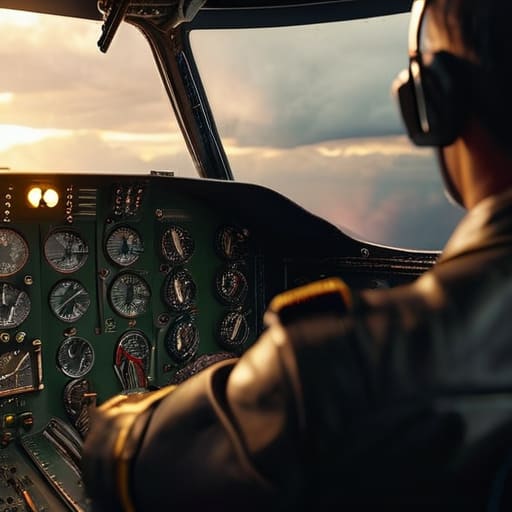
As we bring this flight down to earth, remember that managing your mental altitude isn’t about ignoring the storm clouds, but about knowing how to navigate through them. We’ve talked about utilizing CBT techniques to recalibrate your internal instruments and, perhaps most importantly, silencing that nagging negative self-talk that acts like a heavy drag on your wings. Just like when I’m hunched over a stubborn radial engine in my workshop, sometimes you have to tinker with the small, internal components before the whole machine runs smoothly again. By applying these tools, you aren’t just surviving the turbulence; you are learning to master the controls of your own emotional cockpit, ensuring that negative thought patterns no longer dictate your flight path.
So, as you prepare for your next departure, I want you to look toward the horizon with the same wonder I felt as a boy watching silver wings catch the morning sun. Life will inevitably throw some unexpected crosswinds your way, but you possess the grit and the gear to stay on course. Don’t let a momentary cloud bank convince you that the sun has vanished forever; it’s merely waiting for you to climb above the ceiling. Keep your eyes on the stars, keep your spirit fueled by resilience, and never forget that the most breathtaking views are always found just beyond the storm. Blue skies are waiting for you.